
Platelet-Rich Plasma Therapy for Natural Regeneration
At Foster Medical, we offer Platelet-Rich Plasma (PRP) therapy as part of our regenerative medicine services. PRP uses a concentrated portion of your own blood to support the body’s natural healing and tissue-repair processes.
Because PRP is derived from your own blood, it provides a personalized approach to regenerative care. Platelets contain growth factors and other signaling proteins that play important roles in tissue repair, cellular communication, blood vessel formation, and the body’s natural healing response.
Our goal is to use these natural components to support your body’s ability to repair and regenerate tissue while developing a treatment plan based on your individual needs.
PRP stands for Platelet-Rich Plasma. It is a concentrated portion of plasma from your own blood that contains a higher concentration of platelets than normal circulating blood.
Platelets are best known for their role in blood clotting, but they also contain numerous growth factors and signaling molecules involved in the body’s repair processes. When platelets become activated, they release these substances into the surrounding tissue.
Research has investigated PRP for a variety of applications, including musculoskeletal injuries, joint conditions, tendon and ligament problems, wound healing, and certain hair and skin applications. The potential benefits and outcomes can vary depending on the condition being treated, the preparation of the PRP, and the individual patient.
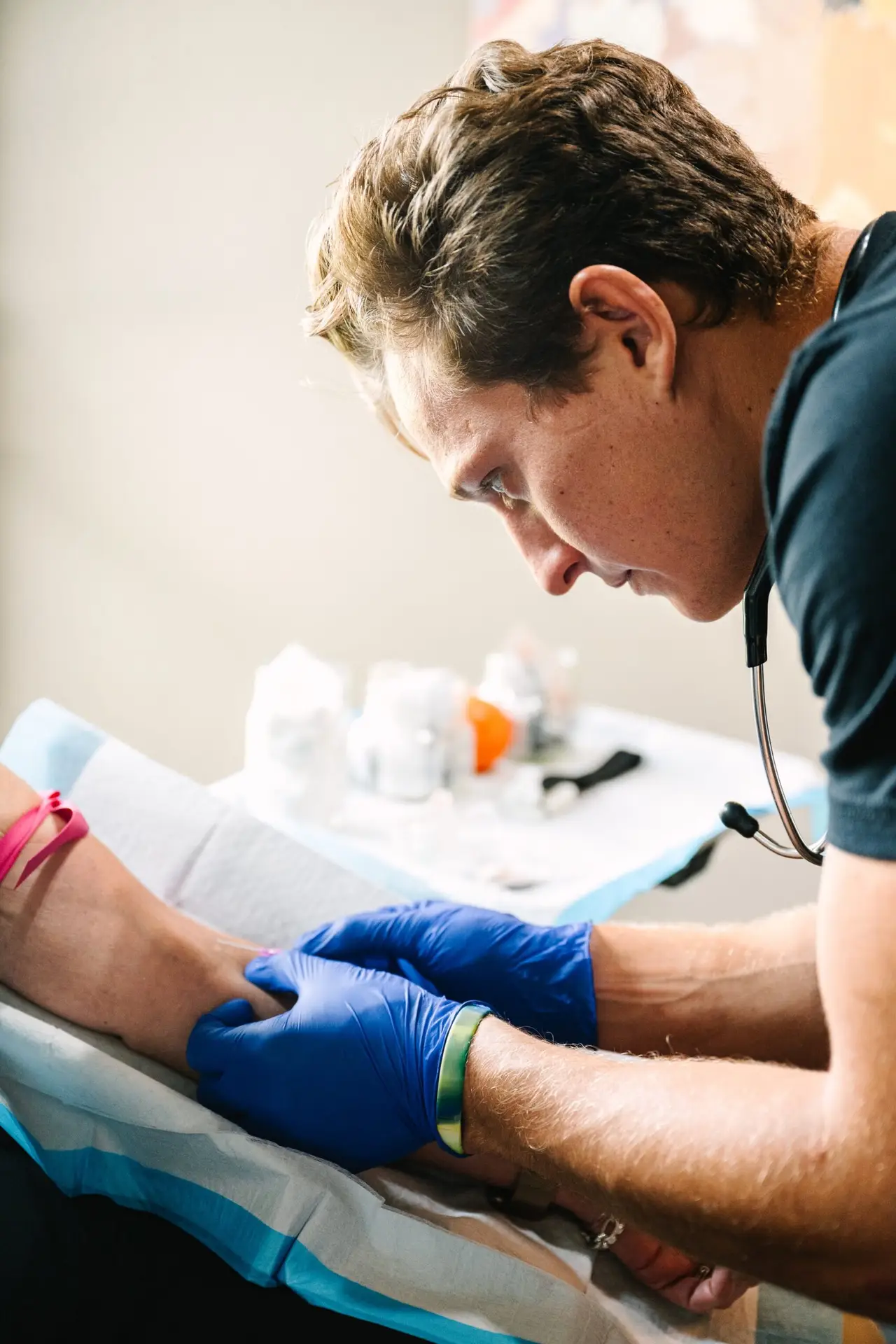
PRP therapy begins with a simple blood draw. A small amount of your blood is collected and placed into a specialized centrifuge that separates its components.
The platelet-rich portion of the blood is then carefully collected and prepared for treatment. The concentrated PRP is administered to the targeted area based on your individualized treatment plan.
By concentrating platelets and their associated growth factors at a specific treatment site, PRP is intended to support the body’s natural repair response.
PRP is considered a regenerative therapy because it works with the body’s own biological processes rather than introducing an entirely foreign substance.
Platelets contain a variety of growth factors and signaling molecules that are involved in tissue repair, inflammation, blood vessel formation, and cellular activity. By concentrating these components and delivering them to a specific area, PRP may help create an environment that supports the body’s natural healing response.
PRP is not a one-size-fits-all treatment, and results can vary. Our medical team will evaluate your individual condition and determine whether PRP may be an appropriate option for you.
PRP has been studied and used in a variety of areas of medicine. Depending on the patient’s condition and treatment goals, PRP may be considered for:
PRP has been investigated as a treatment option for certain joint conditions, including osteoarthritis, as well as injuries involving tendons, ligaments, and other soft tissues.
PRP may be used to support the body's repair response in certain tendon and ligament injuries. Concentrated platelets can deliver growth factors directly to the area being treated.
For active individuals, PRP may be incorporated into a comprehensive treatment plan for certain activity-related soft-tissue injuries and recovery needs.
PRP has also been studied as an option for certain types of hair loss. When administered to the scalp, the growth factors contained within PRP may support the health and activity of hair follicles.
PRP has applications in aesthetic and dermatologic medicine as well. It has been studied for supporting collagen production, skin quality, wound healing, and tissue regeneration. Because PRP protocols differ depending on the condition being treated, your treatment plan will be customized to your specific goals and needs.
One of the unique aspects of PRP therapy is that it uses a biological material obtained directly from you.
Rather than relying on a synthetic substance, PRP concentrates components that are naturally present in your own blood. This makes PRP an appealing option for patients interested in regenerative approaches that support the body’s own healing mechanisms.
PRP is also minimally invasive and can be incorporated into a broader treatment plan that may include other regenerative, wellness, or supportive therapies.
Your PRP appointment begins with an evaluation and discussion of your treatment goals. If PRP is determined to be appropriate, a small amount of blood will be drawn and processed to prepare the platelet-rich plasma.
Once prepared, the PRP is administered to the designated treatment area. Depending on the area being treated, your provider may use an appropriate imaging or guidance technique to help deliver the treatment accurately.
The length of your appointment and the number of treatments recommended will depend on the area being treated, your individual condition, and your treatment goals.
Because PRP works by supporting biological processes rather than providing an immediate structural change, improvements may develop gradually over time.
PRP therapy may be an option for patients looking for a regenerative approach to certain injuries, joint conditions, hair concerns, or tissue-repair needs.
However, PRP is not appropriate for every patient or every condition. During your consultation, our medical team will review your medical history, symptoms, treatment goals, and available options to determine whether PRP is appropriate for you.
At Foster Medical, we take an individualized approach to regenerative medicine. Our goal is to help you understand your options and develop a treatment plan designed around your unique needs.
Interested in learning whether Platelet-Rich Plasma therapy may be right for you?
Contact Foster Medical to schedule a consultation and learn more about our regenerative medicine options.
Discover what PRP therapy may be able to do for you and your body’s natural healing process.